






The answer is YES, if we truly understand market dynamics and precisely target the structural weaknesses of the giants.
1. The Nature of the Market: "Familiar Local Eateries" Beat "Platform Brands"
Unlike other sectors, food delivery users are loyal to the taste and familiar spots (local hawkers, street food, family restaurants), not to any single app.
- Insight: Customers crave specific local favorites — nasi lemak stalls in Malaysia, pad thai vendors in Thailand, phở spots in Vietnam, or adobo places in the Philippines. They care little about the app's color scheme, as long as the food arrives hot and cheap.
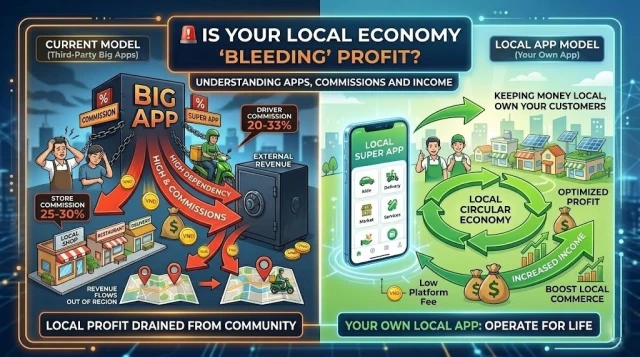
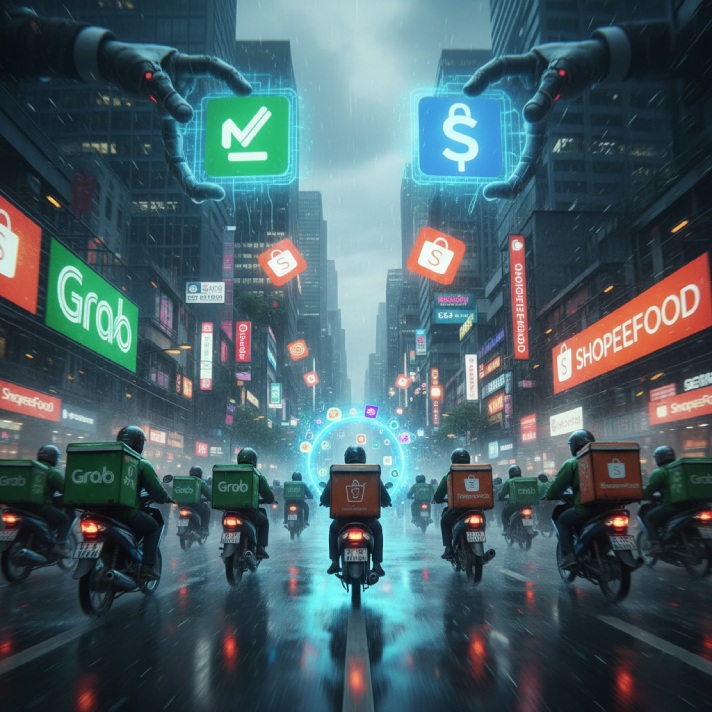
- Opportunity: Giants like Grab and ShopeeFood, with heavy overheads and super-app complexity, often charge high commissions (20-30%), inflating final prices.
- Strategy for small apps: Prioritize PRICE. Lower commissions allow cheaper dish prices, drawing users to order the same beloved local food via your platform.
2. The Supply Source Problem: Don't Seek Permission — Use "Buy on Behalf"
A common hurdle for new apps: "How to onboard merchants?" This is often overstated.
- Concierge Strategy (Buy on behalf): No need for formal restaurant sign-ups initially. Proactively list popular local menus from hawkers, warungs, or small eateries.
- Process: User orders via App → Driver buys as a regular customer → Delivers to user.
- Advantage: Eliminates merchant onboarding barriers, providing vast supply without heavy sales effort — ideal for hyper-local or provincial focus.
3. The Fatal Weakness: Driver (Rider) Management
Customers and merchants aren't the core issue — drivers are. Small apps succeed or fail based on building a reliable rider network.
Drivers need steady real income; they won't ride just for ideology.
Strategic Differences: Mega-Cities vs. Provincial/Tier-2 Areas
This distinction often decides victory for smaller players:
A. In Mega-Cities (Jakarta, Bangkok, Manila, Singapore, Kuala Lumpur, Ho Chi Minh City, Hanoi) — "Hitting a Wall"
- Characteristics: Many full-time professional riders rely on high order density ("order explosions") for livable income.
- Risk for small apps: Low initial volume → Riders fear idle time and lost earnings. Switching apps means turning off Grab/Shopee/Gojek, risking stable income.
- Result: Hard to attract pros without massive subsidies or guaranteed minimum earnings — very capital-intensive in saturated urban hubs.
B. In Provincial/Tier-2 Cities & Rural Areas — "Untapped Goldmine"
- Characteristics: Abundant part-time/freelance workers (e.g., motorbike owners with day jobs, students, or side-hustlers) seeking extra income without full-day commitment.
- Opportunity for small apps: These riders install your app for occasional orders, with no pressure for 8-10 hour shifts. Giants often have thinner coverage or higher effective fees here.
- Conclusion: Small/local apps can thrive in provinces, secondary cities (e.g., Surabaya, Chiang Mai, Cebu, Penang, Da Nang), by tapping idle local labor without huge early revenue guarantees.
4. SWOT Summary for Small/Local Apps
Here's a summarized SWOT based on regional realities:
| Factor | Analysis Content |
|---|---|
| Strengths | Agile, low-overhead operations. Lower costs → Offer cheaper prices to users / better pay to riders. Strong hyper-local knowledge (cultural/food preferences in provinces). |
| Weaknesses | Low initial order density. Tech may lag behind giants. Limited marketing funds. |
| Opportunities | Provincial / tier-2 markets: Giants under-penetrated or charge effectively high fees. Idle/part-time labor pool. Price-sensitive demand: Users want escape from high platform fees in less competitive areas. |
| Threats | Chicken-and-egg loop: Need riders for users, users for riders. Aggressive promotions/subsidies from giants if threatened. Potential consolidation (e.g., acquisitions by Grab/Shopee). |
Strategic Advice
Avoid direct head-on battles with Grab or ShopeeFood in core mega-cities right away. Use the "Oil Stain" approach:
- Launch in a focused provincial or tier-2 area (e.g., secondary cities in Indonesia/Thailand/Philippines/Malaysia).
- Adopt "Buy on behalf" to instantly access quality local menus without merchant contracts.
- Build part-time rider teams from local residents/motorbike owners.
- Leverage lower prices to win loyal customers of familiar local eateries.
In conclusion: Small/local apps win not through fancy tech, but by better managing hyper-local rider networks and delivering superior value (lower prices, faster/fresher local food) in underserved provincial markets across Southeast Asia and Asia.
See More Deployment Service : ODS - White-Label Multi-Service App
((Vietnam-based solution, launch in just a few days, full brand customization, provincial/tier-2 area support via zone management & franchising – ideal for small startups in Hai Phong, Vietnam, and similar underserved regions across Southeast Asia)
- food delivery ,
- order food online ,
- 24/7 food delivery ,
- food delivery app ,
- delivery market ,
- super app ,
- multi-service app ,
- white-label app ,
- local economy ,
- delivery solution ,
- cheap rides ,
- ride-hailing ,
- personal shopper ,
- grocery delivery ,
- express delivery ,
- pitch reservation ,
- designated driver ,
- hire a driver ,
- on-demand services ,
- digital transformation.
Share :
Random Posts